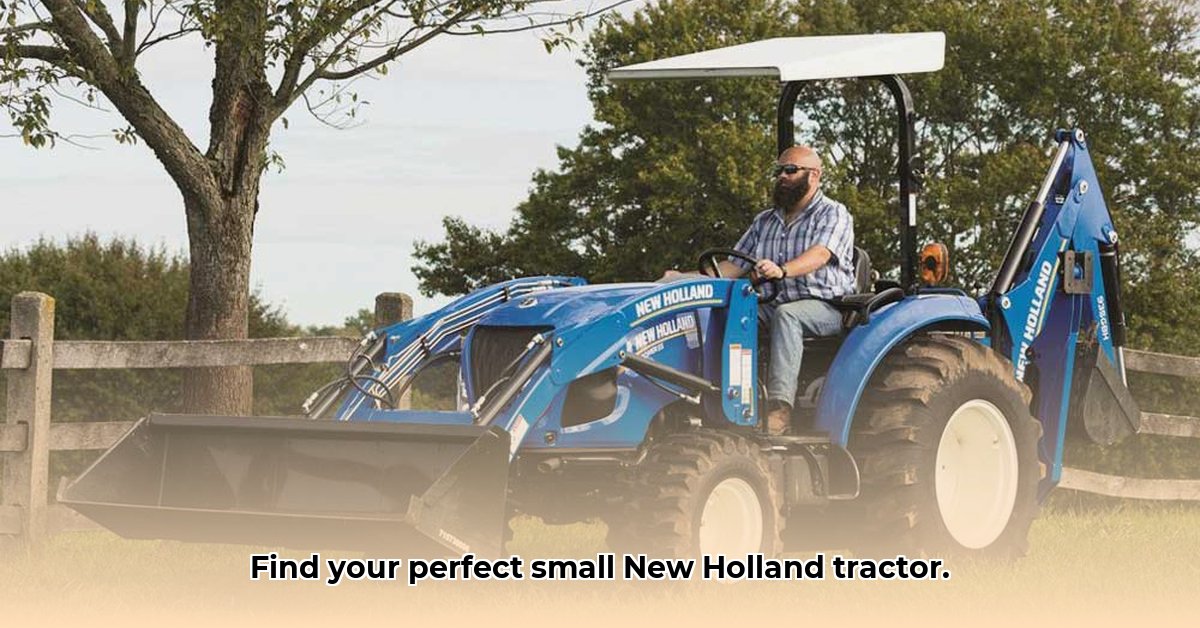
Choosing the right small tractor can be overwhelming. New Holland's WORKMASTER and Boomer series offer excellent options for various needs, from small-scale farming to landscaping. This guide helps you navigate the decision-making process, focusing on efficiency, sustainability, and responsible operation. We'll cover selecting the right model, maximizing performance, and addressing potential risks. For more information on New Holland tractors, check out this helpful resource.
Choosing the Right Small New Holland Tractor
The first step is deciding between the WORKMASTER and Boomer series. Think of it this way: WORKMASTER tractors are the reliable workhorses, ideal for smaller properties and lighter tasks like mowing or light tilling. Boomers are the powerhouses, better suited for larger properties, more demanding tasks, and heavier workloads.
To simplify the selection, use this decision tree:
Step 1: Primary Use Case
- Light Duty/Landscaping: WORKMASTER (Its size and capabilities are perfect for these applications.)
- Heavy Duty/Farming: Boomer (You’ll need that extra power and performance.)
Step 2: Budget
- Budget-Conscious: WORKMASTER (Offers excellent value and affordability.)
- Higher Budget: Boomer (Provides a wider range of features and capabilities.)
Step 3: Property Size
- Smaller Acreage: WORKMASTER (More compact and maneuverable for smaller areas.)
- Larger Acreage: Boomer (Enhanced power and capabilities for efficient larger-area operation.)
This process significantly narrows down your options. Remember to research specific models within each series to find the best fit for your individual needs. Aren't you curious which models best suit your specific needs and budget?
Maximizing Efficiency and Sustainability
Getting the most from your tractor while being environmentally responsible is key. Here’s how:
1. Fuel-Saving Techniques:
- Regular Maintenance: Preventative maintenance is crucial. Regular oil changes and filter replacements keep the engine running smoothly and efficiently, minimizing fuel consumption. (A well-maintained engine is a fuel-efficient engine.)
- Minimize Idling: Avoid unnecessary idling. Turn off the tractor when not actively working to save fuel and reduce wear and tear. (Idling wastes fuel and increases engine wear.)
- Appropriate Gear Selection: Use the correct gear for the task. Forcing the tractor to work harder than necessary wastes fuel and decreases efficiency. (Using the right gear optimizes engine performance and fuel efficiency.)
2. Attachment Selection:
- Avoid Redundancy: Only purchase attachments essential for your specific needs. Avoid buying equipment you'll rarely use. (Avoid unnecessary expenses by targeting essential tools.)
- Correct Tool Matching: Always select attachments designed for the specific task to minimize damage and ensure efficiency. (Using the right tool ensures optimal performance and prevents equipment damage.)
3. Preventative Maintenance Schedule:
Regular maintenance is critical for longevity and minimizing downtime. Here’s a basic schedule:
| Maintenance Task | Recommended Frequency | Importance |
|---|---|---|
| Oil Change | Every 50 hours or annually | Maintains engine lubrication and optimal performance. |
| Filter Replacement | As needed (check regularly) | Prevents contaminants from entering the engine. |
| Fluid Level Checks | Before each use or weekly | Prevents overheating and equipment failure. |
| Tire Pressure Check | Weekly | Improves fuel efficiency and traction. |
Addressing Potential Risks
While New Holland tractors are robust, potential issues can arise. Regular maintenance dramatically reduces these. Early detection of small problems prevents larger, more costly repairs down the line. For instance, consistent fluid level checks mitigate overheating and hydraulic failure risks. Always adhere to the manufacturer's recommended maintenance intervals.
Regulatory Compliance
Operate your tractor responsibly by familiarizing yourself with local regulations. Emission standards, safety rules, and noise ordinances vary by region. Before operation, consult your local agricultural authority or county extension office for specific guidelines.
Conclusion
Selecting the right small New Holland tractor involves careful consideration of your needs, budget, and long-term goals. Following this guide will help you make an informed decision, ensuring years of efficient and productive use of your new machine. Remember, proper maintenance is crucial for maximizing your investment and minimizing unforeseen problems.